
Overview
For accurate data extraction, you need to combine contextual understanding with structured validation. By coupling AI with rules, enterprises can produce consistent, reliable, and workflow-ready data across all document types.
- AI alone cannot ensure consistent data extraction accuracy
- Rule-based validation improves precision and data reliability
- Hybrid systems handle diverse document formats effectively
- Structured outputs align directly with business system requirements
- Reliable data enables faster workflows and better decisions
You've probably explored how artificial intelligence can help extract data, only to be frustrated by inconsistent outputs and the sheer "document chaos" from varied formats. Many businesses face this: AI extraction is inconsistent and messy, and difficulty standardizing data from different documents, especially PDFs. If your goal is to extract data reliably from any document and turn it into a usable, structured format, then understanding how to get accurate data extraction is key.
This is where the power of combining AI with deterministic rules truly shines. It's the smart way to standardize unstructured documents and extract structured data from PDFs . By blending AI's ability to understand context with the precision of rules, you achieve a new level of accuracy and reliability for AI document extraction with validation. This approach doesn't just extract data; it ensures it's extracted accurately, consistently, and in a format that fits your needs perfectly, turning "document chaos" into workflow-ready structured data.
Let’s explore how this approach solves the most common extraction challenges.
Why AI alone or rules alone isn't enough
Trying to tackle "document chaos" with AI or rules by themselves often leads to frustration. LLMs are excellent at understanding context, interpreting nuances, and grasping the meaning within text. They can handle complex language and identify relationships, which is great for understanding varied document structures and helps to fix inconsistent AI extraction.
However, AI can sometimes be unpredictable, leading to "messy" outputs or missing crucial details. On the other hand, rule-based systems (like regular expressions or pattern matching) are highly precise but very rigid. They work well when data is in a predictable format, but they struggle with the variations found in real-world documents.
The real breakthrough comes when you combine these two approaches. This creates a system that can understand the meaning (AI) and then apply precise checks and extractions (rules) to ensure the data is accurate, consistent, and formatted correctly, leading to significantly more accurate data extraction with hybrid reasoning.
Combine AI and rules to go from document chaos to accurate extraction
The effectiveness of this combined approach in achieving accurate data extraction comes from its multi-layered strategy to manage "document chaos." It creates consistent, standardized "abstraction frames" no matter how messy the input or original document format. Whether you have a clean invoice or a scanned, multi-page contract with unique layouts, this system can normalize the input. This means it can handle document metadata, different language formats, and other quirks that often stump purely AI-driven solutions.
When AI models are less confident about an extraction, the system can use fallback logic. This might mean relying on stricter rules for that specific piece of information or flagging it for human review. This way, instead of potentially wrong data, the system either extracts with high certainty or clearly shows where human eyes are needed, contributing to consistent data extraction. This is vital for data integrity. Plus, the ability to trace extracted data back to its source provides transparency and auditability, critical for many industries. This turns potentially "messy extraction" into reliable, business-ready output.
Four key components for reliable data extraction
A smart system for data extraction typically has several interconnected parts working together to ensure the final output is accurate and complete, even when faced with document chaos:
1. AI for understanding meaning
These AI models are the "brains," understanding the semantic meaning of the text. They excel at interpreting complex clauses, identifying entities, and grasping the overall context of a document. This is crucial for handling the nuances within unstructured data and PDFs. Their ability to align meaning ensures that extracted information is not just text, but data that relates correctly to each other, helping to fix inconsistent AI extraction.
2. Rules for precision
This component provides the structured and exact extraction capabilities needed to turn unstructured documents into structured data. It uses techniques like regular expressions for specific patterns (e.g., email addresses, phone numbers), pattern matching for recurring fields, and structural cues to understand document layouts. This is essential for extracting precise, predefined data points with high accuracy, especially when the format is predictable within the chaos.
3. Validation for quality control
Once data is extracted, this layer applies further logic to check for data integrity, which is crucial for ensuring "usable data." For instance, it can verify if a date is within a plausible range, if a number follows expected currency formats, or if a required contract clause is complete. This layer acts as a quality control for AI document extraction with validation.
4. Fallback for reliability
When the AI model is less confident about an extraction, this logic ensures the system doesn't produce potentially inaccurate data amidst "messy extraction." It might switch to stricter rules for that field or flag it for manual review. This is key to achieving consistent data from documents and providing business-ready output.
Consider this visualization using a common scenario that recruitment teams encounter.
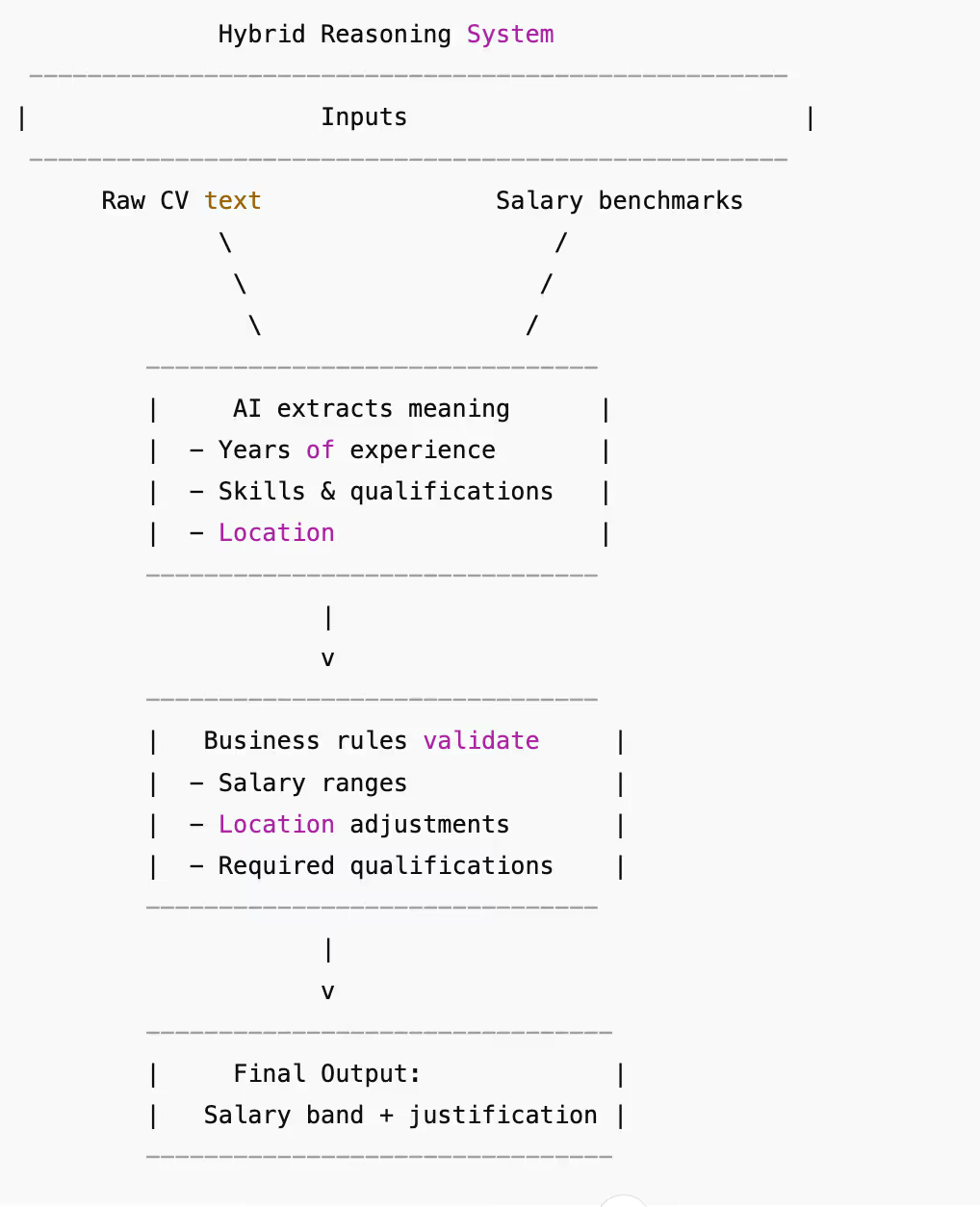
Together, these components create a powerful engine that normalizes inputs, handles variations in document formatting and language, and ultimately produces structured, usable data that matches your specific schema requirements, enabling reliable document processing.
Solving your biggest data extraction challenges
Many businesses struggle with data extraction because traditional methods or purely AI solutions can't handle document chaos. Here's how this combined approach directly solves those common problems:
- AI extraction is inconsistent: Pure AI can be swayed by variations. This system uses rules for predictable elements and a validation layer to ensure consistency across different inputs, providing reliable extraction.
- AI output is messy: AI can sometimes extract extra bits or misunderstand context. The rules and validation layer enforce strict data formats and business rules, cleaning up the output for business-ready output.
- Documents have different formats: This system creates standardized abstraction frames to normalize diverse inputs, ensuring effective data extraction whether the document is a PDF, image, or scanned form, enabling an AI that works on any document .
- Data extraction not matching my schema: A common frustration is when extracted data doesn't fit your database schema. The validation layer and rules can be configured to ensure extracted fields precisely match your required schema, turning unstructured documents into structured data and providing workflow-ready structured data.
- How to standardize multiple document types: This approach provides a framework for standardization. AI learns document patterns, while rules enforce consistency, allowing you to effectively normalize data from various sources into a uniform format, achieving consistent data extraction.
By implementing this smarter approach, you can reliably extract data from any document, ensuring it's structured, usable, and perfectly aligned with your business needs, overcoming "document chaos" with robust AI extraction.
In this video, see how Unframe processes any document format, applies real-time extraction and abstraction, and delivers structured, traceable data for enterprise workflows.
Common scenarios where this approach shines
The versatility of combining AI with rules makes it perfect for many industries and situations where reliable data extraction is crucial, especially when dealing with document chaos:
1. Processing invoices
Extracting key information like invoice numbers, dates, amounts, vendor details, and line items from diverse invoice formats, often found as "PDFs." AI can understand the general layout, while rules ensure specific fields (like total amount or due date) are captured correctly and validated, leading to reliable extraction.
2. Analyzing contracts
Identifying and extracting critical clauses, dates, parties involved, and financial terms from legal contracts, which are often complex "unstructured documents." This system can understand legal jargon (AI) while ensuring specific dates or defined terms are extracted precisely and validated for completeness, turning them into structured data.
3. Insurance claims processing
Automating the extraction of claimant information, policy details, incident descriptions, and supporting document data from claim forms and related documents, often in chaotic formats. This ensures all necessary information is captured accurately for efficient claim adjudication, providing usable data.
4. Financial reporting
Consolidating data from various financial statements, reports, and spreadsheets into a standardized format for analysis and compliance, even when these sources present are unstructured. This approach can handle different reporting styles and ensure numerical accuracy, enabling scalable ingestion.
5. Customer onboarding
Extracting information from application forms, identification documents, and supporting materials to streamline the customer onboarding process, often dealing with diverse "PDFs" and other formats. This ensures all required data is captured accurately and efficiently, leading to workflow-ready structured data.
Overall, the combination of AI's understanding and rule-based precision ensures that the extracted data is not only captured but is also accurate, consistent, and ready for use, fulfilling the need for structured data from PDFs and other complex documents.
See for yourself how you can achieve workflow-ready, business-aligned data with Unframe.
FAQs on accurate data extraction
What's the main advantage of this combined AI and rules approach for data extraction?
The main advantage is achieving much higher accuracy and consistency by combining AI's ability to understand context with the precision of rules, overcoming the limitations of using either alone when dealing with document chaos.
How does this handle documents with inconsistent formats?
This approach creates standardized formats for data, using AI to interpret varied inputs and rules to ensure consistent extraction, regardless of the original document's messiness. This makes it an AI that works on any document.
Can this ensure data matches my specific schema, even from messy extraction?
Yes, the rule-based engine and validation layer can be precisely configured to ensure extracted data fields conform to your required schema, transforming unstructured documents into structured data and providing business-ready output.
Why is rule-based reasoning important alongside AI for reliable document processing?
Rule-based reasoning provides precise, deterministic checks for specific data points and formats. This ensures accuracy and consistency where AI alone might struggle with ambiguity in unstructured data or PDFs.






.svg)